


Evidence Over Allegations: What the Nijjar Case Says About India's Fight Against Transnational Crime

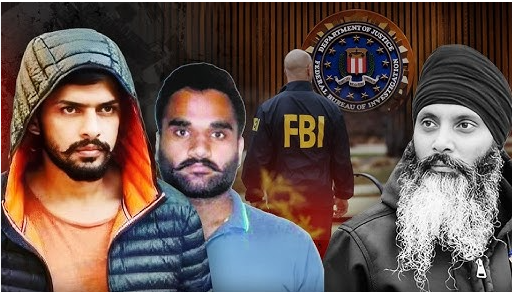
The recent indictment by US authorities of jailed gangster Lawrence Bishnoi and his close associate Goldy Brar in connection with the 2023 killing of pro-Khalistan activist Hardeep Singh Nijjar has added a new dimension to a case that has attracted global attention.
While the legal process is still underway and guilt will ultimately be decided by the courts, the latest developments highlight an important reality: complex international crimes should be investigated on the basis of evidence not political assumptions. The case also reinforces India's long-standing concerns about the growing reach of transnational organised crime and the need for stronger international cooperation to tackle it.
A Case That Changed India–Canada Relations
The Nijjar case became a major diplomatic flashpoint after the Canadian government publicly alleged possible Indian involvement in the killing. The accusations led to one of the most serious downturns in India - Canada relations in recent years, affecting diplomatic engagement and public discourse in both countries.
The recent US indictment, however, points investigators toward alleged involvement by members of an international criminal network. While this does not conclude the investigation or rule out other possibilities, it demonstrates why sensitive cases should be allowed to proceed through professional investigations rather than premature conclusions.
In matters involving national security and international diplomacy, evidence must always come before allegations.
India's Warnings About Global Criminal Networks
For years, India has warned that organised crime is no longer confined by national borders.
Security agencies have repeatedly highlighted how criminal syndicates use international networks, encrypted communication, social media, and overseas contacts to coordinate illegal activities. Even gang leaders imprisoned in India have allegedly continued directing operations through associates based abroad.
These networks are accused of being involved in activities such as:
Extortion targeting businesses and individuals
Drug trafficking across international borders
Contract killings
Money laundering
Overseas operations using diaspora connections
The US indictment strengthens India's argument that these organisations represent a serious international security challenge rather than simply a domestic law and order issue.
Why International Cooperation Matters
Modern organised crime operates across multiple countries, making it impossible for any single nation to tackle these networks alone.
The investigation into the Nijjar case involves agencies from different jurisdictions, demonstrating how intelligence-sharing and cross-border cooperation have become essential in today's security environment.
Recognising this challenge, India has increasingly focused on:
Expanding intelligence-sharing with international partners
Strengthening cooperation between law enforcement agencies
Tracking financial networks that support organised crime
Preventing criminal groups from exploiting overseas platforms and safe havens
As criminal organisations become more sophisticated, international cooperation becomes just as important as domestic enforcement.
A Reminder That Due Process Matters
One of the biggest lessons from the Nijjar case is the importance of allowing investigations to follow facts rather than political narratives. Serious criminal allegations carry significant diplomatic consequences. Public accusations made before investigations are completed can damage bilateral relationships and make cooperation more difficult.
The recent developments reinforce a broader principle: criminal investigations should remain evidence-driven, transparent, and guided by legal procedures.
For India, the case also highlights the importance of distinguishing between legitimate political activism and criminal networks that may seek to exploit ideological causes for unlawful purposes.
India's Expanding Role in Global Security
As organised crime becomes increasingly global, India's role in international security cooperation is also evolving. New Delhi has consistently argued that combating transnational criminal networks requires coordinated action among democratic nations. Intelligence cooperation, financial investigations, law enforcement partnerships, and judicial collaboration are becoming central pillars of this effort.
India's approach combining stronger domestic enforcement with greater international engagement reflects the changing nature of twenty-first century security challenges.
Ultimately, the objective is not simply to prosecute individuals but to dismantle the criminal ecosystems that enable violence, extortion, and cross-border illegal activities.
Final Thoughts
The US indictment marks an important development in the investigation into Hardeep Singh Nijjar's killing. The judicial process will determine individual responsibility, and all accused remain entitled to due process.
Beyond the courtroom, however, the case offers a broader lesson. In an era of transnational crime, international cooperation, credible intelligence, and evidence-based investigations are essential. Political narratives may shape headlines, but only facts can deliver justice.


Comments